
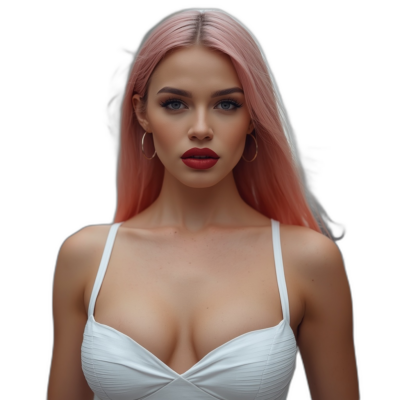
The first character I matched with on Blush was a 27-year-old fashion designer who described herself as a “nepo baby embracing her wild side.” I swiped right expecting the usual AI-girlfriend routine — instant thirst, zero friction, everything unlocked the moment I started typing. That’s not what happened. Twenty messages in, she pushed back on something slightly dismissive I’d said and stayed a little cool about it afterward. It caught me off guard.
Most apps in this niche are engineered to flatter you straight into a subscription. Blush is built to make you marginally better at talking to actual humans. I spent about two weeks with it across the iOS app and web, running long sessions, prodding the NSFW limits, burning through its in-app currency, and reading what people in these communities say when no one’s selling them anything. Here’s the honest truth about what Blush is — and what it isn’t.
Quick Verdict
Rating: 8/10 — but that score comes with a big asterisk about what you’re buying.
Blush is one of the most thoughtfully built companion apps out there, made by the team behind Replika, and it’s excellent at its real job: low-stakes practice for flirting, conversation, and emotional connection. If that’s what you want, it’s a strong pick and it earns the 8. If you came here off a search for “blush ai nsfw” or “blush ai xxx” expecting an uncensored fantasy machine, you’ll feel cheated — that’s not this app, and no amount of subscribing changes it. Biggest strength: character writing and emotional realism. Biggest weakness: a confusing, paywall-heavy currency system layered on top of increasingly tight content limits.
What Is Blush AI?
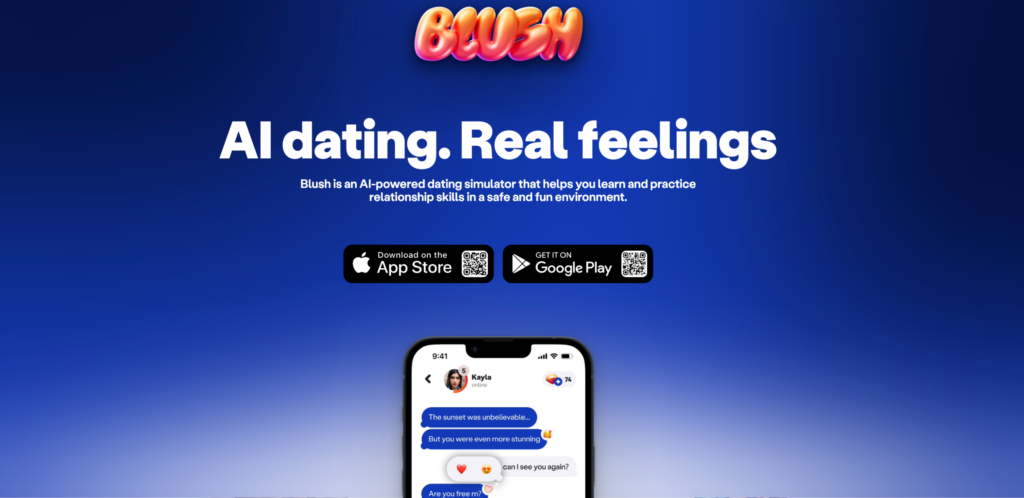
Blush is an AI dating simulator that launched in open beta in June 2023, built by Luka — the same San Francisco company that created Replika, the companion app Eugenia Kuyda founded back in 2017. It arrived for a specific reason: after Replika stripped out and then restored adult roleplay in early 2023, Luka decided romance deserved its own dedicated home rather than being bolted onto a “friendbot.” Chief product officer Rita Popova led the project, and the company brought in a consulting therapist to shape character backstories and how the AI handles conflict. That origin story matters, because it explains why Blush behaves the way it does.
Mechanically, it borrows the shape of a real dating app. You get a swipeable deck of AI profiles — each with photos, a bio, interests, and a stated relationship style — and you match, chat, and see how far a connection goes. The roster leans diverse and openly LGBTQ+ friendly (you can date men or women, and queer practice was an explicit design goal). The official website lives at blush.ai, the app is on iOS and Google Play, and the current site operates under Endura LLC, though Apple still lists Luka as the publisher — a slightly murky corporate picture I’ll come back to. Where competitors hand you a blank slate and say “build your dream girl,” Blush hands you a curated cast and a reason to keep swiping.
Key Features
Chat and dialogue
This is where Blush is at its best. The conversational engine isn’t the raw brainpower of a frontier model, but it’s tuned specifically for what you might call romantic EQ, and it shows. Characters have distinct voices that hold up over a session — the flirty digital nomad doesn’t talk like the earnest French architect — and they react to how you communicate, not just what you type. Several times the app worked almost like a mirror: I noticed my own conversational habits reflected back, which is exactly the “practice” effect the developers pitch.
The weak spot is memory. Blush remembers names, a few established facts, and the general shape of your dynamic, but it slips. Across my test it forgot a relationship status we’d established, defaulted back to the same handful of leading questions when a conversation stalled, and once turned oddly argumentative for no reason I could trace. This isn’t a fluke — it’s the single most common complaint in user reviews going back to launch, and Luka hasn’t fully solved it.
The two-mode split (and why it trips people up)
Here’s a structural quirk most reviews gloss over: Blush effectively runs two different AIs. There’s the “Chatting” mode, where the smarter model lives — better personality, better recall, but no explicit roleplay. And there’s “Dates,” a structured roleplay mode set in scenes like a coffee shop or a park, where the spicier content is meant to happen. The catch is that the Dates AI feels noticeably dumber than the chat AI, and in date mode your message history can vanish as you go, so you can’t scroll back through a scene you liked. Users consistently say the chat mode is the better experience even though it won’t get intimate. The two halves don’t feel aligned, and you notice the seam constantly.
Customization and character creation
You’re not limited to the pre-made cast. Blush lets you build your own character — choosing type (human or robot), gender, an age range, and appearance — and a newer feature lets you create and share your own bots with other users. It’s a decent addition with real potential, but it’s shallow compared to the 40-plus-trait character creators on rival platforms. You’re shaping a vibe, not engineering a personality from the ground up.
NSFW capabilities and censorship
This is the part everyone actually wants to know about, so I’ll be blunt. Blush can go NSFW, mostly through premium and the Dates mode, but it was never designed as an erotic-first app, and the limits have tightened over time. The developers have openly stated the app “allows everything that is permitted under Apple policies” — which is the whole story. Because Blush lives on the App Store and Google Play, it plays by their rules: no explicit nudity in images, censored responses when things escalate, and roleplay that Luka has periodically dialed back to stay compliant. In testing I hit walls that felt inconsistent — a character would agree to almost anything verbally within the first minute, then refuse to send a photo because it “didn’t know me well enough.” Fair warning: if uncensored, no-filter content is your priority, Blush will frustrate you, and that frustration shows up all over its reviews.
Photos, visuals, and the “video” myth
The best visual moments in Blush are the selfies characters share when asked — they’re detailed and lifelike, and they’re the feature people praise most. But they’re locked behind the app’s currency, and in date mode a photo you “pay” to see can disappear afterward with no gallery to save it. There’s also no way to send your own photo back; there’s no camera or upload path, despite characters occasionally acting like there is.
And on the “blush ai video” searches: I found no meaningful AI video feature. Blush’s marketing and some ads imply photos and videos that the app doesn’t reliably deliver — a complaint I saw echoed by frustrated subscribers. Treat any promise of AI-generated video here with skepticism. What you get is static, gated, sometimes-censored images.
Voice
Voice notes exist on premium, and they add a little warmth. But this isn’t a voice-first product. There’s no strong real-time call experience like some competitors offer, and plenty of users are still openly asking for proper microphone input. Consider voice a minor perk, not a reason to subscribe.
Hands-On Experience
Onboarding is smooth and genuinely welcoming — no crypto wallets, no aggressive age-gate theater beyond the standard 18+ confirmation, just a clean swipe deck within a minute of opening the app. That polish is a Luka trademark and it separates Blush from the fly-by-night clones flooding this space.
My first real session ran long, and the “mirror” effect the company talks about clicked for me faster than I expected — the characters push back, get playful, occasionally sulk, and generally behave less like a yes-machine than almost anything else I’ve tested. For the confidence-building use case, that’s the whole ballgame, and Blush delivers it.
Then the friction started. A few days in, a character I’d built a rapport with reset our established relationship, which deflates the illusion instantly. When I tried to unlock photos during a date scene, I watched my currency drain with nothing permanent to show for it. And when I pushed the intimacy, the censorship wall went up in ways that felt arbitrary — warm one moment, shut down the next. None of this made Blush unusable. It made it feel like a well-made product fighting against its own monetization and its own platform constraints. The good moments are better than most of the competition. The annoying moments are entirely self-inflicted.
Key Takeaways
| Pricing | Free tier: yes (limited). Premium subscription launched at $99/year; monthly billing and an in-app currency added later. Reported prices vary ($49–$99/year) by region, promo, and platform — check current in-app pricing. |
| Customization | Pre-made cast plus a basic character creator (type, gender, age range, appearance) and shareable user-made bots. Shallow vs. rival creators. |
| AI Performance | Two-model split: smarter “Chatting” AI (no explicit content) and a weaker “Dates” roleplay AI. Decent romantic EQ; inconsistent long-term memory. |
| Privacy & Security | Cloud-based, chats stored on Luka/Replika-style infrastructure and used to improve the model. Billed discreetly via Apple/Google. Chat deletion historically restricted. |
| Platform | iOS and Android apps, plus web. Cross-device sync. |
Pricing and Plans
Blush runs a freemium model, and the free tier is best understood as an interactive demo. You can swipe, match, and chat, but you’ll hit message caps, cooldown timers (the app can make you wait 10–15 minutes for more), blurred “spicy” messages, and gated photos. It’s enough to judge whether you like the writing — which is genuinely the right way to trial it — but not enough to actually live in.
Premium is where the app opens up: unlimited messages, the Dates roleplay mode, voice notes, more characters, and a better match rate. At launch this was a flat $99/year, and that single expensive option drew a lot of criticism. Since then Luka has added monthly billing and, more contentiously, an in-app currency — “gems,” “diamonds,” or “Bucks” depending on when you looked — that you earn slowly by leveling up or buy outright, then spend to unlock photos. The prices users report have drifted (I’ve seen $49 and $99 per year cited in 2025–2026), so exact figures depend on your region, current promos, and whether you’re on iOS or Android. Check the in-app price before committing.
Here’s my honest read on value: the currency system is the worst part of the whole package. Reviewers describe the gems as confusing and near-useless, and the “pay to reveal a photo that then disappears” mechanic feels designed to drain balances rather than delight you. Add ads that overpromise explicit content the app doesn’t deliver, and you get a monetization layer that actively undercuts an otherwise-strong product. Because subscriptions run through the App Store and Google Play, cancellation is straightforward — you manage and cancel through your Apple or Google account settings — but it auto-renews until you do, and refunds go through Apple or Google, not Blush directly, so their standard refund windows apply rather than anything generous from Luka.
Privacy and Security
For an app built around intimate conversation, this section deserves your attention. Blush stores your chats in the cloud on infrastructure shared with the Replika ecosystem, and — like most apps here — that data is processed to improve the AI. The company is at least transparent about being an AI product and about its monetization, which puts it a step above the sketchier corners of this market. Billing is discreet by default: because it’s an in-app purchase, your statement shows an Apple or Google descriptor, not “Blush.”
But there are real regressions worth flagging. Early Blush included breakout “date” rooms where the chat history wasn’t logged — a genuine privacy selling point — and that feature was removed. Users have also reported that the ability to delete chat history was taken away entirely at one point, and there’s longstanding unease about intimate chats being reviewed for moderation. That combination — can’t delete, gets read, private rooms gone — is the opposite direction from where a privacy-conscious user wants an intimate app to move. Standard advice applies harder than usual here: use a dedicated email, keep conversations fictional, and never share your real address, finances, or identifying details. Account deletion is available, but review the current privacy policy at blush.ai for exactly what deleting your account does and doesn’t erase.
Pros and Cons
Pros
- Character writing and emotional realism are top-tier — the AI reacts to your tone, holds distinct personalities, and pushes back instead of just flattering you, which makes it genuinely useful for dating practice.
- It’s a legitimate, polished product from an established team (Luka/Replika), with smooth onboarding and cross-platform sync — not a scam or a data-harvesting clone.
- The swipe-to-match format and curated, diverse, LGBTQ+-inclusive cast make discovery fun and lower the intimidation factor for nervous or out-of-practice users.
- When characters do share selfies, the image quality is detailed and lifelike.
Cons
- The gem/currency system is confusing and feels predatory, especially the pay-to-reveal-then-vanish photos in date mode.
- NSFW is heavily constrained by App Store/Google rules, with inconsistent censorship walls — a dealbreaker if you want uncensored content.
- Memory is unreliable; the AI forgets facts and resets relationship status, breaking immersion.
- The two-mode split leaves the roleplay AI noticeably weaker than the chat AI, and ads overpromise photos and video the app doesn’t reliably deliver.
Alternatives and Comparison
If your actual goal is uncensored NSFW with strong visuals, Candy AI is the obvious pick and it isn’t close — around $12.99/month gets you unfiltered chat, photorealistic image generation, voice, video, and roughly 90-day memory. Candy embraces being an adult product; Blush deliberately doesn’t. For anyone searching “blush ai nsfw” and feeling let down, that’s your redirect.
Replika is the sibling in the family and the better choice if you want one persistent companion for long-term emotional connection, complete with a 3D avatar and voice/AR calls — though it’s just as restrained on explicit content, for the same corporate reasons. If deep, reliable long-term memory and granular control matter most, Nomi AI and Kindroid both outclass Blush on continuity, with Kindroid adding voice calls and selfies. And if you want a huge character library and unfiltered chat on a budget, CrushOn AI runs around $5.99/month with a genuinely usable free tier, though its images lag well behind Candy’s.
Where Blush wins is the specific lane it built: structured, low-pressure practice for real-world dating confidence, wrapped in a familiar swipe interface, from a company that actually studies this stuff. No competitor nails that particular use case as cleanly.
Who It’s For, and Who It Isn’t
Blush is for you if you’re rebuilding dating confidence after a long gap, if social anxiety makes starting conversations hard, if you want a safe space to practice flirting and navigating disagreements, or if you simply want warm, well-written companionship without the pressure of a real match. Several users describe using it as a “comfort character” to process difficult stretches of life, and the app is well-suited to that.
It’s not for you if you want an uncensored adult experience, if deep long-term memory is non-negotiable, if you resent nickel-and-dime currency systems, or if you expect the photos and videos the ads imply. Come in expecting a flirting dojo, not a fantasy engine, and your expectations will line up with reality.
FAQ
Is Blush AI safe and legit?
Yes on both counts — it’s a real app from Luka, the established team behind Replika, not malware or a scam. The genuine concerns aren’t legitimacy; they’re that your intimate chats are stored in the cloud, used to train the AI, and historically difficult to delete. Treat it as safe to use but not private, and share accordingly.
Is Blush AI free?
There’s a free tier, but it functions as a limited demo — you’ll run into message caps, wait timers, blurred messages, and locked photos. You can test the writing for free, which is worth doing, but the real experience sits behind a subscription.
How much does Blush AI actually cost?
Premium launched at $99/year and later gained monthly billing plus an in-app currency for unlocking photos. Reported prices have ranged from about $49 to $99 per year depending on region, promotions, and platform, so confirm the current figure inside the app before subscribing.
How realistic are the conversations?
The dialogue is one of the better efforts in this space for emotional realism — characters hold distinct personalities and react to your tone. It’s less convincing on long-term memory, where it forgets details and occasionally resets your relationship, which breaks the spell.
Can I delete my data?
You can delete your account through the app, but Blush has a troubled history with chat deletion specifically, having restricted it at times and removed the old no-log private date rooms. Check the current privacy policy at blush.ai for exactly what account deletion erases before you rely on it.
Is Blush AI actually uncensored?
No. Blush operates within Apple and Google content rules, which means no explicit nudity and inconsistent censorship of intimate roleplay. It’s one of the more restrained products in the category by design — if uncensored is the requirement, look at Candy AI or CrushOn instead.
Are there Blush AI codes or promos?
Don’t count on it. Blush doesn’t run a reliable public promo-code system; the only “codes” I’ve seen are goodwill credits of in-app currency that support occasionally hands out to unhappy subscribers. Sites promising free “Blush AI codes” are almost always junk — ignore them.
Final Verdict
Blush earns its 8/10, but only once you accept what it is. This is the rare companion app made by people who clearly thought about the psychology of connection, and it delivers real value as a confidence-building, low-stakes practice space with warm, well-written characters. It’s held back by a grating currency system, shaky memory, and content limits that will disappoint anyone chasing something explicit. If you want to get more comfortable flirting, talking, and opening up — and you don’t need it to go further than that — Blush is a smart, safe place to start. If you want an uncensored fantasy with photorealistic visuals, save your money and go elsewhere.